
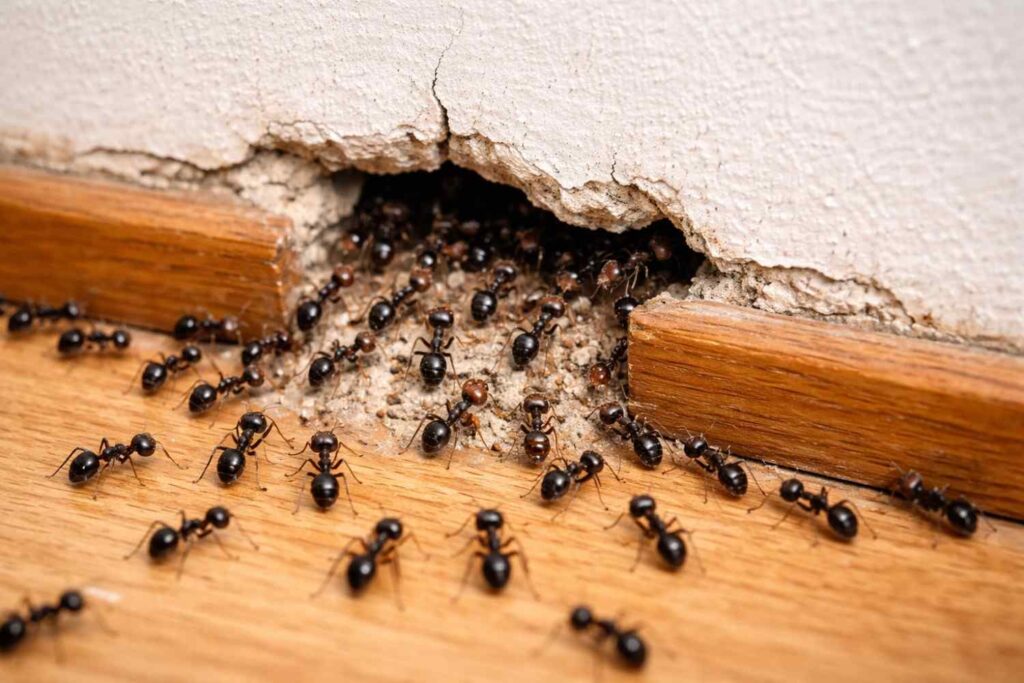
You notice a steady line of tiny ants emerging from a narrow crack in your living room wall. You wipe them away, clean the area, and even spray an insecticide, yet they return within hours. If this feels like a losing battle, you are not alone. The truth is, ants coming from wall cracks are not random visitors. They are worker ants from an established colony that has likely nested deep within your walls, drawn by moisture, food residues, or shelter. In Indian homes particularly in humid coastal cities like Navi Mumbai, wall voids, plumbing gaps, damp plaster, and monsoon-related seepage create ideal hidden pathways for ants to enter, breed, and thrive without detection. The good news is that with the right understanding and methods, you can stop them permanently.
This comprehensive guide explains the real causes behind why ants are coming from walls, how to identify the type of ant you’re dealing with, and the proven steps to eliminate them for good not just temporarily.
Why Are Ants Coming From Wall Cracks: The Real Causes
Ants do not invade homes out of curiosity. They follow basic survival instincts, and wall cracks offer both easy access and secure nesting opportunities.
Food & Water: Why Ants Are Attracted Inside Walls
The most common reason ants are coming from wall cracks is that they have located a reliable source of food or water inside your home. Worker ants leave the main nest to search for resources. As they travel, they lay down invisible chemical trails called pheromones. Once a scout finds something valuable such as spilled sugar, grease near the stove, pet food, or even condensation around an RO unit it returns to the colony, reinforcing the trail. Soon, dozens of ants follow the same path through the same crack. This behavior explains why ants suddenly appear in home walls: seasonal changes, outdoor food scarcity, or new indoor attractants can trigger a sudden surge in activity.
Moisture in Walls: A Major Reason Ants Infest Homes
While food draws ants in, moisture keeps them there. Ants require water to survive, and walls adjacent to kitchens, bathrooms, or utility areas often trap humidity. Leaking pipes behind tiled walls, dripping AC drain lines, or damp plaster after heavy rains create microclimates that are especially appealing to moisture-loving species like carpenter ants. In India’s tropical climate, where humidity remains high for much of the year, these conditions make interior wall cavities prime locations for nesting far more attractive than dry outdoor soil.
Wall Cracks & Gaps: How Ants Enter and Nest Inside
Wall cracks serve a dual purpose: they are both entryways and potential homes. Hairline fissures in aging plaster, gaps around electrical conduits, spaces beneath baseboards, or openings near pipe penetrations allow ants to slip inside undetected. Once inside, they may establish satellite nests in wall voids, behind false ceilings, or within insulation. Unlike outdoor colonies, these hidden nests are protected from weather, predators, and routine cleaning, allowing populations to grow silently for weeks or months before becoming visible.
Common Types of Ants Found in Wall Cracks in Indian Homes
Not all ants behave the same way, and identifying the species can dramatically influence your control strategy.
- Odorous House Ants (often called Sugar Ants): These are small, brown ants that emit a rotten-coconut smell when crushed. They rarely nest inside walls but use cracks as travel corridors to reach kitchens and pantries. They are primarily attracted to sweets, syrups, and protein-based foods.
- Carpenter Ants: Larger in size, usually black or reddish-brown, these ants tunnel into moist or decaying wood inside walls, door frames, or ceiling beams. Over time, their excavation can weaken structural integrity, making them a serious concern in older buildings or homes with chronic leaks.
- Pharaoh Ants: Tiny, pale yellow ants that prefer warm, humid environments. They commonly nest inside wall voids near hot water pipes or electrical panels. Because they reproduce rapidly and split easily when disturbed, they are extremely difficult to eliminate with conventional sprays.
- Pavement Ants: Typically enter through foundation cracks and may extend their nests upward into ground-floor walls, especially in apartments or bungalows with direct soil contact.
Understanding whether you are dealing with simple foragers or true wall-nesters determines whether surface-level cleaning is sufficient or if deeper intervention is required.
Does Spraying Ants Make the Problem Worse?
One of the most common and counterproductive responses to seeing ants coming out of wall cracks is to spray them with aerosol insecticides. While these products kill the ants you see, they act as repellents that disrupt the colony’s normal behavior. Instead of returning to the nest, surviving workers scatter and may establish new satellite colonies in other parts of the wall or ceiling, a process known as “budding.” This is why infestations often seem to multiply after spraying, appearing in new locations days later. Repellent sprays treat the symptom, not the cause, and can turn a manageable problem into a widespread, hard-to-control infestation.
How to Stop Ants Coming From Wall Cracks Permanently (Step-by-Step)
True elimination requires targeting the entire colony, including the queen and brood hidden deep within walls. Here is a proven, effective approach.
Step 1: Use Ant Bait to Eliminate the Colony
The single most effective method for getting rid of ants in walls permanently is the strategic use of ant bait. Place gel baits or bait stations near active trails but do not kill or disturb the foraging ants. These slow-acting, non-repellent formulas are carried back to the nest by workers, who share them with larvae, other workers, and eventually the queen. Within 5 to 10 days, the entire colony collapses from within. Look for baits containing active ingredients like indoxacarb or boric acid, which are highly effective against common household ant species in India.
Step 2: Remove Ant Trails from Walls & Surfaces
After placing bait, clean affected surfaces to remove existing scent trails. Mix equal parts white vinegar and water, or use warm soapy water, and wipe along baseboards, countertops, and around wall cracks. This prevents new ants from following old paths and encourages them to discover the bait instead.
Step 3: Seal Wall Cracks to Stop Ant Entry
Once ant activity subsides, seal every potential entry point to prevent reinfestation:
- Use silicone caulk or acrylic sealant for fine cracks in walls and baseboards
- Fill larger gaps with expanding foam or wall putty, then paint over for a clean finish
- Wrap copper mesh or steel wool around pipe openings before sealing ants cannot chew through metal
This directly answers how to seal cracks to stop ants and closes the door on future invasions.
Step 4: Remove Food & Moisture Sources
Remove the reasons ants entered in the first place:
- Store all dry goods – rice, sugar, lentils, and pet food in airtight glass, metal, or thick plastic containers
- Fix leaky taps, dripping RO units, and pipe condensation immediately
- Wipe kitchen surfaces nightly and sweep floors to remove crumbs
- Use covered garbage bins and dispose of wet waste daily
Even a meticulously clean home can unknowingly offer attractants if food is stored in thin plastic or moisture is left unaddressed.
Step 5: Create an Anti-Ant Barrier Around Your Home
Apply natural deterrents along potential entry zones:
- Sprinkle food-grade diatomaceous earth along window sills and door thresholds
- Wipe baseboards with diluted peppermint oil (10 drops per cup of water)
- Dust cinnamon powder near wall-floor junctions
Additionally, trim climbing plants, creepers, or tree branches that touch your building exterior, as they act as bridges for ants to reach upper-level cracks.
DIY vs Professional Ant Control for Ants Coming From Wall Cracks
Many homeowners attempt quick fixes, but effectiveness varies widely depending on the method and the type of infestation. The table below compares common approaches to help you choose the right strategy for an ant infestation in walls especially when ants are emerging from hidden voids.
| Method | How It Works | Effectiveness for Wall Infestations |
| Aerosol Sprays | Kills visible ants on contact using fast-acting chemicals | Low – acts as a repellent, causes colony budding, offers only temporary relief |
| Vinegar or Soapy Water | Disrupts pheromone trails on surfaces | Medium – prevents new ants from following paths but does not affect the nest inside walls |
| Over-the-Counter Ant Baits | Contains slow-acting poison carried back to the colony by workers | High – can eliminate entire colonies if placed correctly and not disturbed |
| Sealing Cracks Alone | Blocks entry points with caulk or putty | Low to Medium – stops new ants but leaves existing colonies trapped inside, which may find alternate exits |
| Professional Baiting + Inspection | Uses targeted gel baits, moisture detection, and species-specific treatment after thorough inspection | Very High – locates hidden nests, eliminates root cause, includes sealing advice and follow-up |
This comparison of ant control strategies clearly shows that while DIY baits can work for minor issues, persistent or recurring activity especially ants coming from wall cracks at night often requires expert intervention to achieve lasting results.
When Should You Call Pest Control for Ants in Walls?
While small, occasional ant sightings can often be managed at home, certain signs indicate a deeper problem that demands professional help:
- Ants continue appearing more than two weeks after consistent baiting
- You notice fine sawdust-like material (frass) near baseboards or window frames, a sign of carpenter ant activity
- Ants emerge from multiple cracks, ceiling joints, or electrical outlets, suggesting a widespread colony
- You live in a ground-floor apartment, older building, or area with chronic drainage or seepage issues
- You’ve tried multiple DIY methods without success
Professional pest control technicians use specialized tools like moisture meters, thermal cameras, and borescopes to locate hidden nests within walls. They apply non-repellent, child- and pet-safe baits precisely where needed and provide tailored advice on sealing and prevention something generic store-bought solutions cannot offer.
How to Prevent Ants from Coming Through Wall Cracks
Permanent ant control is not a one-time task but an ongoing practice. To protect your home year-round:
- Inspect walls, baseboards, and pipe entries monthly for new cracks or gaps
- Reapply sealant annually, especially before the monsoon season when humidity and leaks increase
- Maintain indoor humidity below 60% using exhaust fans, cross-ventilation, or dehumidifiers
- Store all food properly and avoid leaving dishes or pet bowls out overnight
- Schedule preventive pest control service every 6 months, particularly if you’ve had previous infestations
Understanding what attracts ants inside walls goes beyond cleanliness, it’s about managing moisture, access, and environmental conditions that make your home inviting to pests.
Conclusion: How to permanently stop Ants coming from Wall Cracks
Ants coming from wall cracks are far more than a surface-level nuisance. They signal an active, often hidden colony that has found your home hospitable due to moisture, food access, or structural gaps. Temporary fixes like sprays and wiping may reduce visible activity, but only a colony-targeted approach centered on baiting, trail removal, and permanent sealing can deliver true, long-lasting results. In India’s humid climate, where wall cavities and plumbing systems create ideal ant highways, proactive and informed action is essential.
If you’ve followed DIY steps without success, or if ants keep returning from the same crack despite your efforts, it’s time to seek expert support. Contact Softcare Pest Control in Navi Mumbai today. Our certified technicians specialize in identifying hidden ant nests, applying safe and effective baiting systems, and implementing structural sealing techniques to ensure your home remains ant-free permanently.
FAQs on Ants Coming From Wall Cracks
Why are ants coming from wall cracks in my house?
Ants come from wall cracks because they’ve established a hidden colony inside your walls, drawn by moisture, food trails, or shelter, and are using the cracks as entry and exit points.
Can ants live and build nests inside walls?
Yes, certain species like carpenter ants and pharaoh ants commonly build nests inside wall voids, especially in areas with moisture, warmth, or access to food.
What attracts ants into wall cracks?
Ants are attracted to wall cracks by moisture from leaks, food odors from kitchens, and the dark, protected environment walls provide for nesting and travel.
How do ants enter through tiny cracks in walls?
Ants can squeeze through gaps as small as 1 millimeter, using hairline cracks in plaster, gaps around pipes, electrical conduits, or baseboards to access interior spaces.
How can I find an ant nest inside my wall?
Look for consistent ant trails leading to a specific crack, listen for rustling sounds in quiet rooms, check for sawdust-like frass with carpenter ants, or inspect near water sources like pipes and RO units.
What is the fastest way to get rid of ants in walls?
The fastest effective method is placing non-repellent ant bait near active trails so worker ants carry the poison back to the nest, eliminating the entire colony within days.
How do I stop ants from coming through wall cracks permanently?
Stop ants permanently by using bait to kill the colony, erasing pheromone trails with vinegar or soapy water, and sealing all cracks with silicone caulk or copper mesh to block re-entry.
Are ants in walls a sign of a serious infestation?
Yes, ants emerging regularly from walls, especially during the day or from multiple spots, indicate a mature, established infestation that requires targeted treatment.
Do ants cause damage to walls or property?
Carpenter ants can tunnel into damp wood inside walls, beams, or frames, causing structural damage over time, while other species mainly pose hygiene and nuisance concerns.
When should I call professional pest control for ants?
Call a professional if ants persist after two weeks of baiting, you see sawdust or multiple entry points, suspect carpenter ants, or live in a high-humidity area with recurring infestations.