
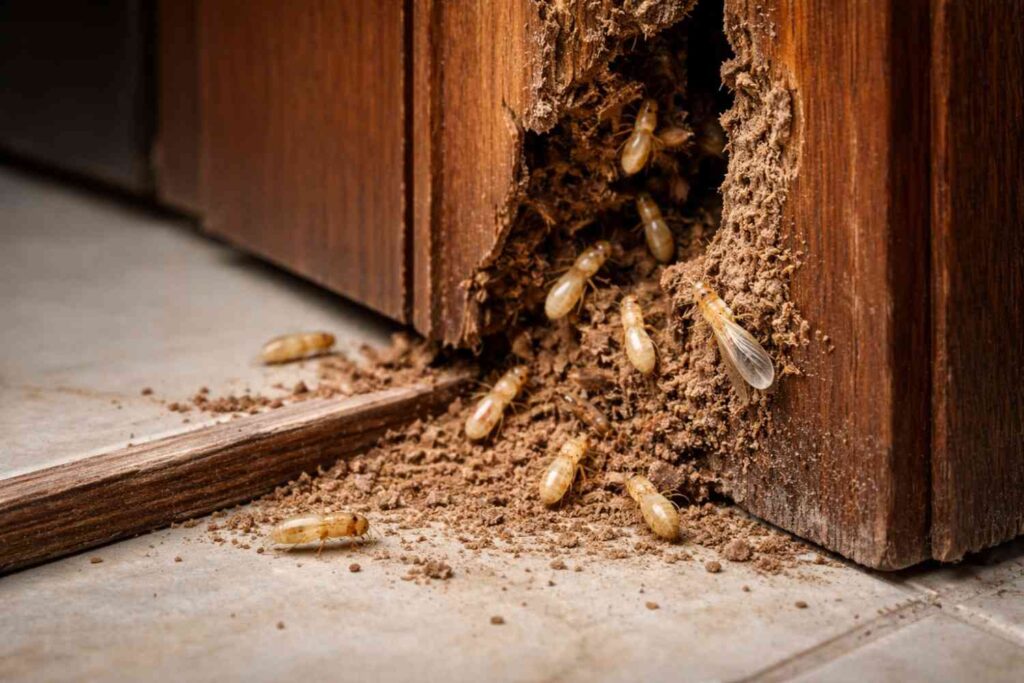
Discovering termites coming from wooden door frames is a disturbing experience for any homeowner. You open a door and notice small, pale insects emerging from the wood, or you spot tiny holes with fine dust collecting below. This is not just a cosmetic issue. It is a warning sign that requires immediate attention. Termites feed on cellulose found in wood, and door frames provide an ideal entry point because they often connect to moist areas or touch the ground. Understanding what causes this problem, how to identify it early, and what steps to take next can protect your home from extensive structural damage.
This guide will help you recognize early warning signs, understand why termites target door frames, and take the right actions to eliminate the infestation and prevent future problems.
Why Termites Target Wooden Door Frames (Hidden Causes Most Homeowners Miss)
Wooden door frames are particularly vulnerable to termite infestation for several interconnected reasons. A clear understanding of these factors helps homeowners take preventive action before damage occurs.
Moisture Accumulation: Door frames in bathrooms, kitchens, laundry areas, or ground-level entries frequently experience higher humidity from showers, cleaning, cooking, or weather exposure. Termites require moisture to survive and are strongly attracted to damp, softened wood. Even minor leaks from pipes, roofs, or poor drainage can create the ideal environment for termites in wooden door frames.
Direct or Near-Direct Ground Contact: Many door frames sit directly on concrete slabs or have wood components that touch soil. Subterranean termites live underground and build mud tubes to reach wood above ground. When a frame provides a direct pathway from soil to structure, it becomes a prime target for colonization.
Hidden Construction Gaps: During installation, small gaps often remain between the wooden frame and the surrounding wall or foundation. These concealed spaces allow termites to enter and feed without being seen. Termites in door frame wood can thrive in these protected voids for months or years before visible signs appear.
Untreated or Poorly Sealed Wood: The back side of a door frame, which contacts the wall, is frequently left unsealed or untreated during construction. This raw wood absorbs moisture from the wall and provides an easy food source. Termites inside wooden door frames often start feeding in these hidden areas.
Proximity to Other Wood Sources: Door frames near wooden furniture, flooring, or structural beams create a continuous food pathway. Once termites establish in one area, they can spread to connected wood elements, including termites in wooden door frame holes that serve as entry or exit points.
When termites in wooden door frames establish a colony, they eat wood from the inside out. They can leave only a thin outer layer of paint or wood intact, making the damage difficult to spot until it becomes severe. This is why recognizing early warning signs is critical for protecting your property.
Signs of Termites in a Wooden Door Frame (Complete Identification Checklist)
Catching a termite problem early can save thousands in repair costs and prevent structural compromise. Use this detailed table to identify common and subtle signs of termites in the door frame. Each indicator helps confirm whether you are dealing with an active infestation and guides your next steps.
If you suspect termites in door frame wood, review these specific signs. This checklist covers the most reliable visual, auditory, and physical clues that professionals use to diagnose termite activity in wooden door frames, including both common and lesser-known indicators.
| Sign | What to Look For | Why It Matters |
| Hollow-Sounding Wood | Tap the frame with a screwdriver handle. A dull, hollow, or papery sound indicates internal damage. | Termites consume wood from the inside, leaving a thin outer shell. This test reveals hidden feeding. |
| Mud Tubes on Frame or Wall | Pencil-sized tunnels made of soil and saliva running along the frame or where frame meets wall. | Subterranean termites build these shelter tubes to travel safely between soil and wood. Active tubes mean an ongoing infestation. |
| Stuck or Sagging Doors | Doors that suddenly feel tight, warp, or do not close smoothly. | Termite feeding introduces moisture that swells wood. Structural weakening can also cause frames to shift. |
| Pinholes or Wood Dust | Tiny exit holes with fine, wood-colored pellets (frass) or dust accumulating near the frame base. | Drywood termites push droppings out of nest holes. Frass that reappears after cleaning confirms active termites in wooden door frame holes. |
| Blistered or Peeling Paint | Paint that bubbles, peels, or looks water-damaged without a visible leak. May include a musty odor. | Termites add moisture to wood as they feed. This mimics water damage and signals termites inside wooden door frame. |
| Discarded Wings | Small piles of delicate, fish-scale-like wings near door corners or windowsills. | Swarmers shed wings after mating. Finding wings indicates a mature colony is nearby or has entered your home. |
| Quiet Clicking Sounds | Faint clicking or rustling noises inside walls or frames during quiet hours. | Soldier termites bang heads to warn the colony. Heavy feeding can produce audible munching sounds. |
Subterranean vs Drywood Termites in Door Frames: Key Differences Homeowners Should Know
Not all termites behave the same way. Knowing the difference helps you interpret signs accurately and choose the most effective solution. This detailed comparison table explains the two most common types that affect door frames and how each influences treatment decisions.
When diagnosing termites coming out of the door frame, identifying the termite species guides treatment. Use this comparison to understand whether subterranean or drywood termites are likely causing your termite infestation in wooden door frames, and what that means for repair and prevention.
| Feature | Subterranean Termites | Drywood Termites |
| Habitat | Live in soil, build colonies underground. | Live entirely within dry wood, no soil contact needed. |
| Access to Door Frames | Enter through wood-to-soil contact or mud tubes on foundation. | Enter through cracks, vents, or infested furniture moved indoors. |
| Key Sign | Mud tubes on wall termites or foundation. | Frass piles near tiny pinholes in wood. |
| Moisture Need | Require high moisture; often found near leaks or bathrooms. | Can survive in drier wood; common in interior frames and furniture. |
| Damage Pattern | Eat along wood grain, often leaving a honeycomb pattern. | Create clean, smooth galleries inside wood; push frass out. |
| Typical Treatment Focus | Soil treatment, barrier creation, baiting systems. | Direct wood injection, fumigation, or spot treatment. |
Why Are Termites Coming From My Wooden Door Frame? (Main Causes Explained)
Homeowners often ask, why are termites coming from my wooden door frame? The answer usually combines three factors: moisture, access, and food. Door frames in bathrooms, kitchens, or ground-level entries frequently experience humidity from showers, cleaning, or weather. This moisture softens wood and attracts termites. If the frame touches concrete or soil, subterranean termites can travel directly from their underground colony. Even without soil contact, drywood termites can enter through tiny cracks or hitchhike on infested wooden furniture. Once inside, the frame provides a steady food source. Termites in door frames at home often go unnoticed because they feed hidden behind paint or trim. By the time you see termites coming out of the wooden door frame, the colony may already be well established.
What to Do Immediately If Termites Are Coming From Your Door Frame
If you confirm signs of termites in the door frame, act quickly but carefully. Rushed or incorrect actions can worsen the problem. Follow this step-by-step plan to limit damage while arranging professional help.
- Do Not Disturb the Infested Area: Avoid breaking mud tubes, poking holes, scraping frass, or removing infested wood. Disturbing termites can cause the colony to scatter and start new infestations elsewhere in your home. Leave evidence intact for professional assessment.
- Reduce Moisture Immediately: Fix any visible leaks from pipes, roofs, or appliances. Improve ventilation in bathrooms and kitchens by using exhaust fans. Avoid excessive water when cleaning near the frame. If humidity is high, use a dehumidifier in the affected room. Lowering moisture makes the area less attractive to termites.
- Seal Visible Entry Points Temporarily: Use painter’s tape or removable caulk to cover obvious holes or cracks while waiting for inspection. This slows termite movement and prevents swarmers from exiting, but it is not a permanent solution. Do not use expanding foam, as it can trap termites inside walls.
- Remove Nearby Attractants: Move firewood, cardboard boxes, paper stacks, or untreated lumber away from the door area and foundation. These materials can support termite colonies near your home and provide a bridge to structural wood.
- Document the Signs Thoroughly: Take clear, well-lit photos of mud tubes, frass piles, wings, damaged wood, or live termites. Note the location, date, and any patterns you observe. This documentation helps pest control professionals assess the situation faster and design a targeted treatment plan.
- Avoid DIY Insecticide Sprays: Store-bought termite sprays often only kill visible workers. They rarely reach the hidden colony or queen. Incorrect application can drive termites deeper into walls or to new areas. Professional products and methods are far more effective for termites in wooden door frame.
- Contact a Licensed Pest Control Professional Promptly: Termite colonies are complex social structures. Effective treatment requires specialized tools, knowledge of termite behavior, and access to professional-grade products. A professional inspection is the fastest, most reliable way to stop termites in wooden door frames from causing further damage.
How to Get Rid of Termites in Door Frames (Professional Treatment Options)
Deciding how to get rid of termites in a door frame depends on the extent of damage, the termite species, and your home’s construction. Professional pest control services offer several proven, science-backed methods. Understanding these options helps you make informed decisions.
Drill-Fill-Seal Treatment for Localized Infestations: Technicians drill small, discreet holes into the door frame at strategic points. They then inject termiticides directly into hidden voids and galleries where termites feed. The holes are sealed afterward to restore appearance. This method targets termites inside wooden door frame without removing the entire structure, making it ideal for early or moderate infestations.
Baiting Systems for Colony Elimination: Stations containing slow-acting bait are placed around the property perimeter and near suspected activity. Worker termites consume the bait and share it with the colony, including the queen. Over weeks, this eliminates the entire nest. Baiting is especially effective for subterranean termites that travel between soil and door frames.
Thermal Imaging and Moisture Detection for Precision: Infrared cameras and moisture meters allow technicians to locate termite activity inside walls without destructive probing. Heat signatures and elevated moisture levels reveal hidden galleries. This technology helps treat precisely, minimizing unnecessary demolition and ensuring all active areas are addressed.
Soil and Foundation Barrier Treatment: For subterranean termites, applying a liquid termiticide barrier around the foundation creates a chemical shield that termites cannot cross. This stops termites from reaching the door frame from below and protects the entire structure. Treatment includes trenching, rodding, or injection into slab edges.
Fumigation for Widespread Drywood Infestations: When drywood termites have spread to multiple wood elements, whole-structure fumigation may be recommended. The home is sealed and filled with a gas that penetrates all wood, eliminating termites in every stage. This is a major procedure but highly effective for severe cases.
When Replacement Is Necessary: Should you replace termite damaged door frame? Replacement is necessary when structural integrity is compromised. Signs include wood that crumbles easily under light pressure, large hollow areas that span most of the frame, doors that no longer align or stay closed, or visible sagging. In high-moisture areas like bathrooms, consider upgrading to Water-Proof and Termite-Proof (WPC) frames or metal-reinforced options to prevent future termite infestation in wooden door frames.
Post-Treatment Monitoring and Warranty: Reputable pest control providers include follow-up inspections to ensure treatment success. Many offer warranties that cover retreatment if termites return within a specified period. Ask about monitoring protocols and what maintenance you should perform to keep your warranty valid.
How to Prevent Termites in Wooden Door Frames (Long-Term Protection Tips)
Preventing termites in door frame wood starts with reducing attractants and sealing entry points.
- Control Moisture: Ensure bathrooms and kitchens are well ventilated. Fix leaks promptly. Use exhaust fans and dehumidifiers in humid climates.
- Seal Gaps and Cracks: Caulk gaps between door frames and walls. Repair cracks in foundations or exterior walls where termites in wall cracks could enter.
- Treat Wood Proactively: Apply termite-resistant sealants to wooden frames, especially on the back side that contacts walls.
- Maintain Distance from Soil: Keep soil, mulch, or wood piles at least 6 inches away from door frames and foundation walls.
- Schedule Annual Inspections: Termites are active year-round. A professional inspection once a year catches early signs of termites in houses before they reach door frames.
- Monitor Wooden Furniture: Termites in wooden furniture can spread to door frames. Check antique or second-hand wood items before bringing them inside.
Termites in Door Frames: Why Immediate Action Protects Your Home
Termites coming from wooden door frames is a serious warning that should never be ignored. These silent destroyers can compromise your home’s structure while remaining hidden for years. By recognizing early signs, reducing moisture, and acting quickly with professional help, you can stop damage before it escalates. Regular inspections and preventive maintenance are your best defense against future infestations.
If you notice any signs of termites in your door frames or elsewhere in your home, timely professional intervention makes all the difference. For reliable, thorough termite inspection and treatment tailored to your property, trust the experts at Soft Care Pest Control. Their targeted solutions address both visible activity and hidden colonies, giving you lasting protection and peace of mind.
FAQs on Termites in Door Frames
Why are termites coming from my wooden door frame?
Termites emerge from wooden door frames because these areas provide moisture, hidden access, and cellulose-rich wood that colonies need to survive and expand.
Are termites in a door frame a sign of a serious infestation?
Yes, termites in a door frame typically indicate a larger, hidden colony that has been feeding inside your walls or foundation for months.
How do termites enter wooden door frames?
Termites enter through wood-to-soil contact, foundation cracks, wall gaps, or by hitchhiking on infested furniture, using mud tubes or tiny openings as pathways.
What are the early signs of termites in a door frame?
Early signs include hollow-sounding wood, tiny pinholes with frass, mud tubes, stuck doors, blistered paint, discarded wings, or faint clicking sounds inside the frame.
Can termites destroy wooden door frames?
Yes, termites eat wood from the inside out and can completely compromise a door frame’s structural integrity if the infestation is left untreated.
What should I do if I see termites coming out of a door frame?
Do not disturb the area, reduce moisture, temporarily seal visible holes, remove nearby wood attractants, document the signs, and contact a licensed pest control professional immediately.
How can I tell if termites are inside my wooden door frame?
Tap the frame for a hollow sound, look for mud tubes, frass, blistered paint, or stuck doors, and inspect gaps with a flashlight to confirm hidden termite activity.
Should I replace a door frame damaged by termites?
Replace the frame if wood is soft, crumbles, or shows large hollow areas; for minor damage, professional treatment plus wood hardener may be sufficient.
How can I prevent termites from attacking wooden door frames?
Control moisture, seal gaps, keep soil and mulch away from frames, treat wood with termite-resistant sealants, and schedule annual professional inspections.
When should I call pest control for termites in a door frame?
Call pest control immediately upon noticing any termite sign, as early professional intervention stops colony growth and prevents costly structural damage.