
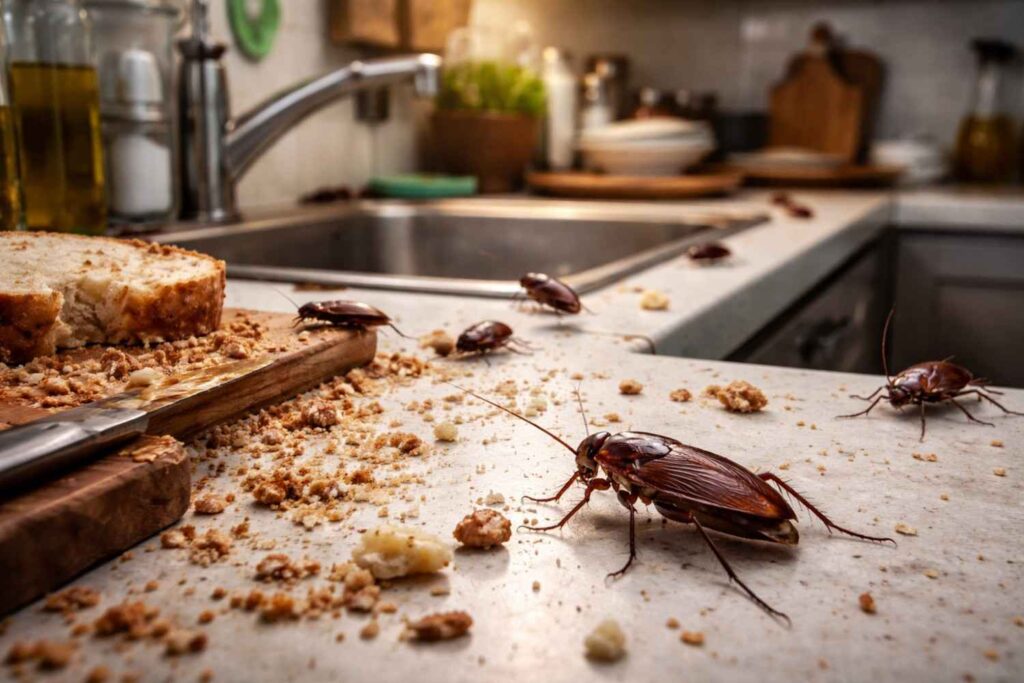
You’ve wiped down every surface, sealed your groceries, and taken out the trash—but you still spot a cockroach darting across your kitchen floor at night. If this feels confusing or frustrating, you’re not alone. The reality is that cockroaches suddenly appearing in my kitchen is rarely about poor hygiene. Instead, it’s often the moment a hidden, growing infestation has become too large to stay concealed. These resilient pests are drawn to the basic elements every kitchen provides: food residue, moisture, warmth, and dark hiding spots. Even in meticulously maintained Indian homes, subtle attractants can invite them in through drains, cracks, or grocery bags.
This guide explains why cockroaches suddenly appear in your kitchen, the hidden signs of infestation, and proven ways to get rid of them. It also covers simple prevention tips and when to choose professional pest control especially for Indian homes and monsoon conditions.
Why Are Cockroaches Suddenly Appearing in My Kitchen? (Quick Answer)
Cockroaches suddenly appear when a hidden infestation grows large enough to become visible. They are attracted to food residue, moisture, and dark spaces, often entering through drains, cracks, or grocery items.
Why Kitchens Attract Cockroaches (Even Clean Kitchens)
Cockroaches don’t invade randomly. They seek environments that support survival and reproduction. Your kitchen by design offers everything they need.
Hidden Food Sources That Attract Cockroaches in Your Kitchen
While visible spills attract roaches, it’s the invisible residues that sustain them long-term. In Indian kitchens, common attractants include:
- Oil splatter behind stoves and exhaust fans
- Spice dust around masala boxes and grinding areas
- Pet food left out overnight
- Open storage of rice, dal, sugar, or flour in thin plastic or paper bags
Even microscopic particles are enough. This explains why there are cockroaches in my clean kitchen because “clean” to us isn’t always “food-free” to them.
Moisture: The Critical Survival Factor
Cockroaches can survive up to a month without food but only about a week without water. Key moisture sources in Indian homes include:
- Leaking pipes under the sink
- Damp dishcloths or sponges left on countertops
- Condensation around refrigerators and RO water purifiers
- Wet floors after mopping, especially during humid months
This constant access to water makes kitchens ideal habitats for cockroaches in the kitchen at night, when they emerge to hydrate and forage.
Common Hiding Spots Where Cockroaches Live in Kitchens
Cooking generates heat, creating warm microclimates perfect for nesting. Common hiding spots include:
- Behind refrigerators, microwaves, and gas cylinders
- Inside wall voids near electrical outlets or gas lines
- Under sinks and within cabinet joints
- Inside drainage pipes and false flooring
These dark, protected zones allow colonies to grow undisturbed often for weeks before becoming visible.
How Cockroaches Enter Your Kitchen (Drains, Cracks & Pipes)
Most cockroaches enter from outside. Common pathways in urban India include:
- Kitchen and bathroom drains, especially in older buildings with shared sewer lines
- Gaps around plumbing, AC pipes, or electrical conduits
- Cracks in walls, floor tiles, or door thresholds
- Cardboard boxes, grocery bags, or second-hand appliances
During monsoon season, flooding can force roaches out of municipal drains and directly into homes through sink outlets triggering a sudden cockroach infestation overnight.
Signs of Cockroach Infestation in Your Kitchen: What to Look For
Seeing one cockroach is a red flag, not an isolated incident. Here’s how to confirm whether you’re dealing with a larger problem.
Cockroach Droppings in Kitchen: What They Look Like
Cockroach feces are small, dark, and granular, easily mistaken for ground coffee or black pepper. Finding them in spice drawers, under cabinets, or near stored grains confirms active feeding and nesting.
Unusual Smell in Kitchen: A Sign of Cockroaches
As populations grow, cockroaches release pheromones that create a distinct smell often described as oily, moldy, or sour. This odor intensifies in enclosed spaces like pantries and is a strong indicator of a mature colony.
Cockroach Eggs and Shed Skins: Hidden Infestation Signs
Cockroaches molt 5–8 times during development, leaving behind translucent, shell-like skins. You may also find oothecae dark brown, capsule-shaped egg cases about 8 mm long hidden in cabinet corners or behind appliances. Each can contain 30–40 nymphs, signaling rapid reproduction.
Seeing Cockroaches During the Day: What It Means
Cockroaches are nocturnal by nature. If you see one during daylight, it usually means the nest is overcrowded and resources are depleted, a clear sign of a severe sudden cockroach infestation.
How to Identify Cockroach Activity: Quick Checklist
To help you quickly assess your risk level, here is a practical diagnostic table outlining the most telling signs of cockroach infestation in your kitchen and what each reveals about the severity of the problem. This cockroach infestation reference guide is designed specifically for Indian households.
| Sign Observed | What It Indicates | Common Locations in Indian Kitchens |
| Small, dark droppings (like black pepper) | Active feeding and nesting | Spice drawers, under sink, grain storage areas |
| Musty or oily smell | High population density; mature colony | Pantry, behind fridge, closed cabinets |
| Translucent shed skins | Ongoing growth and molting cycle | Corners of shelves, behind appliances |
| Dark brown egg cases (oothecae) | Active reproduction; infestation will expand | Inside cabinet hinges, under stoves, wall crevices |
| Cockroaches seen during daytime | Severe overcrowding; urgent action needed | Floor, countertops, near garbage bins |
This table directly answers questions like “why do baby cockroaches appear in the kitchen?” and “how to find cockroach nests in the kitchen” by linking visible clues to hidden activity.
How to Get Rid of Cockroaches in the Kitchen (Proven Methods)
Eliminating cockroaches requires a two-part strategy: remove attractants and apply targeted treatments.
Step 1: Deep Cleaning to Remove Cockroach Attractants
- Clean behind and under all appliances weekly focus on grease buildup behind stoves and crumbs under fridges.
- Store dry goods in airtight glass or metal containers never in original packaging or thin plastic.
- Fix all leaks and keep sink areas dry. Replace damp sponges daily.
- Use lidded garbage bins and dispose of wet waste every evening.
These steps directly address what attracts cockroaches in the kitchen and remove their survival essentials.
Step 2: Best Treatments to Kill Cockroaches Fast
- Gel Baits: Place small dots near entry points. Roaches eat the bait and spread poison to others, highly effective against hidden nests.
- Boric Acid: Lightly dust in cracks and under cabinets (keep away from children/pets). It dehydrates roaches on contact.
- Diatomaceous Earth (DE): A natural powder that damages their exoskeleton safe for indoor use when applied correctly.
- Insect Growth Regulators (IGRs): Prevent nymphs from maturing, breaking the reproductive cycle over time.
For baby cockroaches appearing in the kitchen, combine gel baits with IGRs for full lifecycle control.
Step 3: Seal Entry Points and Block Kitchen Drains
Since cockroaches can come from the drain in kitchen, treat sink and floor drains weekly with enzymatic cleaners. Install fine stainless steel mesh over drain openings. Seal all wall cracks, pipe gaps, and door thresholds using silicone caulk or copper mesh materials roaches cannot chew through.
When to Call Professional Pest Control for Cockroaches
Home remedies may kill visible roaches but rarely eliminate eggs, hidden nests, or drain-dwelling colonies. Seek professional help if:
- You see roaches during the day
- Droppings or odor persist after 2 weeks of treatment
- You live in a ground-floor unit or near open drains
- Previous infestations have returned
Professional pest control services use advanced methods like:
- Targeted gel baiting with commercial-grade formulations
- Drain line treatment to address sewer-origin infestations
- Thermal fogging for hard-to-reach voids
- Structural inspection to identify hidden entry points
This is especially important in dense urban areas like Navi Mumbai, where shared infrastructure increases reinfestation risk.
How to Prevent Cockroaches in Your Kitchen Long-Term
Prevention is ongoing, not one-time:
- Wipe counters and sweep floors nightly
- Inspect grocery bags and cardboard boxes before bringing them inside
- Schedule preventive pest control every 3–6 months, especially before monsoon
- Monitor high-risk zones (under sink, pantry, behind appliances) weekly
Answering “how to stop cockroaches from coming into the kitchen” means making your home inhospitable, not just clean.
Final Thoughts: Stop Cockroaches Before They Spread
A cockroach problem in kitchen is less about cleanliness and more about environment, access, and biology. The sudden appearance of roaches is a warning that an infestation has already taken root. But with the right knowledge, consistent sanitation, and strategic treatment, you can eliminate them and prevent their return. Early action protects your family’s health, preserves your food, and avoids costly, recurring battles.
If you’ve tried cleaning and over-the-counter products but still see activity or if you’re spotting roaches during the day, don’t wait. Contact Softcare Pest Control in Navi Mumbai today. Our certified technicians provide safe, effective, and long-lasting cockroach control solutions designed for Indian homes, ensuring your kitchen stays truly hygienic and roach-free for good.
FAQs on Kitchen Cockroaches
Why are cockroaches suddenly appearing in my kitchen?
Cockroaches don’t just appear overnight. They’ve likely been hiding and multiplying unseen. Their sudden visibility usually means the colony has grown too large to stay concealed, often triggered by changes like monsoon flooding, new food sources, or moisture from leaks.
Does seeing one cockroach mean there is an infestation?
Yes, seeing even one cockroach, especially during the day, is a strong sign of an active infestation, as these pests are nocturnal and typically only emerge in daylight when their nest is overcrowded.
Why do cockroaches come out at night in the kitchen?
Cockroaches are nocturnal by nature. They forage for food and water at night when human activity is minimal, making kitchens, with their accessible crumbs, spills, and moisture, prime targets after dark.
Can cockroaches live in a clean kitchen?
Yes, cockroaches can thrive in a clean kitchen if tiny food residues, moisture from leaks, or entry points like drains and cracks are present. Even spotless homes can unknowingly provide what they need to survive.
What attracts cockroaches to my kitchen the most?
The top attractants are moisture from leaks or damp sponges, hidden food residues such as oil splatter, spice dust, or pet food, and warm, dark hiding spots like behind appliances or inside cabinets.
Can cockroaches come from kitchen drains or pipes?
Yes, especially in urban India, cockroaches often enter homes through kitchen sink drains, sewer lines, or gaps around plumbing, particularly during or after heavy rains when drains overflow.
How do I find where cockroaches are hiding in my kitchen?
Look for droppings, shed skins, or oily smudges along walls. Then inspect common hiding spots: under sinks, behind refrigerators and stoves, inside cabinet joints, and along pipe entry points.
What is the fastest way to get rid of cockroaches in the kitchen?
The fastest effective method is using professional-grade gel baits placed near entry points. They kill visible roaches and spread poison to hidden nestmates, offering colony-wide control within days.
Are cockroaches in the kitchen dangerous for health?
Yes, cockroaches carry bacteria like Salmonella and E. coli, contaminate food surfaces, and their droppings and shed skins can trigger allergies and asthma, especially in children.
When should I call professional pest control for cockroaches?
Call a professional if you see cockroaches during the day, notice recurring activity after DIY efforts, detect a musty odor, or live in a ground-floor unit near drains. These signs indicate a deep-rooted infestation needing expert treatment.