
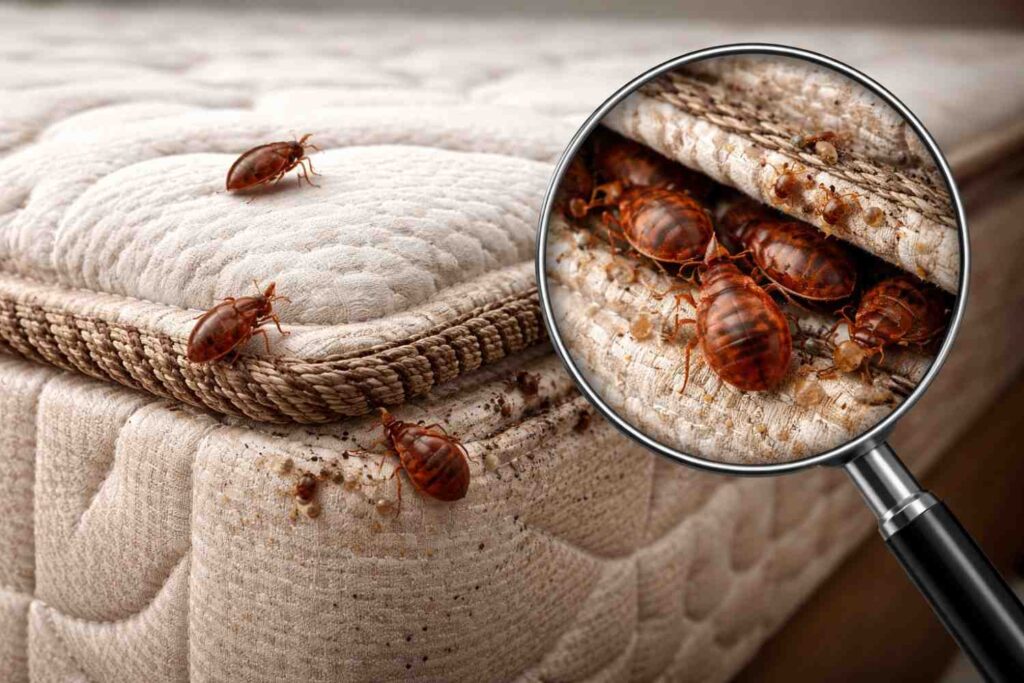
Waking up with unexplained red marks, feeling uneasy in your own bed, or spotting tiny dark specks on your sheets could mean one unsettling thing. You have bed bugs in the mattress. These nocturnal pests do not just cause itchy bites. They thrive in the hidden seams and folds of your bedding, often going unnoticed until the infestation has spread. Unlike other household insects, bed bugs are masters of concealment, making early detection critical. In this comprehensive guide, we will walk you through the unmistakable signs of bed bugs in a mattress, how to confirm their presence, and the most effective treatment options to reclaim your sleep, safely and permanently.
How to Identify Bed Bugs in a Mattress
Bed bugs in a mattress can be identified by dark fecal spots, shed skins, live bugs in seams, and itchy bite marks on exposed skin. Early detection and professional treatment are key to preventing rapid spread.
What Are Bed Bugs and Why Do They Target Mattresses?
Bed bugs are small, flat, reddish-brown insects that feed exclusively on human blood. They are not attracted to dirt or poor hygiene but are drawn to the carbon dioxide and warmth humans emit while sleeping. Mattresses, especially along seams, tags, and under buttons, offer the perfect combination of darkness, proximity to a host, and countless hiding spots. Once inside, they can multiply rapidly, turning a single hitchhiker into a full-blown bed bug infestation in a mattress within weeks.
Because they feed primarily at night, many people mistake their bites for other insects or skin conditions. However, knowing how to identify early warning signs can stop a minor issue from becoming a major problem.
Key Signs of Bed Bugs in Mattress You Shouldn’t Ignore
Detecting bed bugs early is your best defense. Here are the most reliable indicators that your mattress is harboring these pests:
Visible Bed Bugs in Mattress Seams and Folds
Adult bed bugs are about the size of an apple seed, while nymphs (juveniles) are translucent and smaller. Check along stitching lines, corners, and underside folds. Bed bugs hiding in mattress seams are often visible upon close inspection.
Rusty or Dark Spots on Sheets and Mattress (Bed Bug Fecal Marks)
These are bed bug excrement, digested blood that leaves behind reddish-brown or black stains. They often appear as small dots or smears on mattress fabric, pillowcases, or nearby walls.
Shed Skins and Egg Casings in Mattress Seams
As bed bugs grow, they molt five times before adulthood. Finding pale, translucent shells near seams or in crevices confirms active breeding.
Sweet, Musty Odor from Bed Bug Infestation
In heavy infestations, bed bugs emit a distinctive odor often described as musty or similar to coriander. This is caused by pheromones they release.
Bed Bug Bites on Body: Appearance and Symptoms
While not everyone reacts, many wake up with itchy, red welts, often in lines or clusters, on arms, shoulders, neck, or legs. Bed bug bites can last days and may worsen with scratching. Importantly, some people experience bed bugs in their mattress but not bites, as sensitivity varies.
How to Check for Bed Bugs in Mattress (Step-by-Step Inspection Guide)
Knowing how to check bed bugs in mattress properly can mean the difference between early control and widespread infestation. Follow this methodical approach:
| Inspection Step | What to Look For | Why It Matters |
| Remove all bedding | Dark spots, live bugs, eggs | Exposes hidden evidence on sheet-contact areas |
| Examine seams and piping | Live bed bugs in mattress seams, shed skins | Primary hiding zones for active colonies |
| Check mattress tags and labels | Tiny eggs (pearl-white, 1 mm) | Eggs are often glued into fabric folds |
| Inspect box spring and bed frame | Bugs crawling in cracks or joints | Infestations rarely stay confined to the mattress |
| Use a flashlight and magnifying glass | Nymphs, fecal spots, eggs | Enhances visibility of subtle signs |
This process helps you know if mattress has bed bugs with confidence. Pay special attention to areas near where your head and feet rest, as these are high-traffic zones for feeding.
Understanding Bed Bug Behavior: Why Bed Bugs Come Out at Night
Bed bugs in mattress at night are most active between midnight and 5 a.m., when their human hosts are still and breathing deeply. They emerge from hiding to feed for 3 to 10 minutes, then retreat to seams or nearby furniture. This explains why you rarely see them during the day. Bed bugs hiding in mattress remain concealed until darkness.
Additionally, bed bugs spreading from mattress can occur quickly through clothing, luggage, or shared walls in apartments. Within days, they may colonize nightstands, curtains, electrical outlets, or adjacent furniture.
Are Bed Bug Bites Dangerous? Health Risks and Reactions
While bed bugs do not transmit diseases, their bites can cause significant discomfort:
- Intense itching that disrupts sleep and concentration
- Secondary infections from excessive scratching
- Allergic reactions, including swelling, hives, or, in rare cases, anaphylaxis
People with sensitive skin or compromised immunity may experience stronger responses. If you notice bed bug bites, allergic reaction symptoms like widespread rash, dizziness, or difficulty breathing, seek medical attention immediately.
Effective Treatment Options for Bed Bugs in Mattress
Eliminating bed bugs requires a multi-pronged strategy. Here is what works and what does not:
Mattress Encasements for Bed Bug Control
Use bed bug-proof mattress covers that fully zip shut. These trap existing bugs inside, where they starve, and prevent new ones from entering. Leave encasements on for at least 18 months.
Vacuuming Mattress and Bed Frame to Remove Bed Bugs
Vacuum the mattress, seams, box spring, and surrounding floor daily during treatment. Immediately dispose of the vacuum bag in a sealed outdoor bin.
Steam Treatment for Bed Bugs in Mattress Seams
High-temperature steam, above 60°C, kills all life stages on contact. Focus on seams, tufts, and crevices where bed bugs in mattress seams hide. Avoid soaking the mattress to prevent mold.
Washing and Drying Bedding to Kill Bed Bugs
Strip all bedding and wash in hot water, minimum 60°C, then dry on high heat for 30 or more minutes. Heat is one of the most reliable ways to kill bed bugs.
Insecticides for Bed Bugs: What Is Safe and What to Avoid
Over-the-counter sprays often fail because bed bugs have developed resistance. If used, choose EPA-registered products labeled for bed bugs and apply only to non-porous surfaces. Never apply directly on mattress fabric.
Professional Bed Bug Treatment for Mattress and Room
For moderate to severe infestations, DIY methods fall short. Whole-room heat treatments, raising room temperature to 50°C or higher, or professional-grade residual insecticides applied by experts deliver complete eradication.
What Doesn’t Work for Bed Bugs in Mattress (Common Myths)
- Bug bombs or foggers: These scatter bed bugs deeper into walls and are ineffective against hidden populations.
- Essential oils or ultrasonic devices: No scientific evidence supports their efficacy.
- Replacing the mattress alone: Without treating the room, new mattresses will quickly become reinfested.
When to Call a Professional Bed Bug Pest Control Service
If you have confirmed a bed bug infestation in the mattress and see signs beyond the bed, such as bugs in drawers, behind picture frames, or on curtains, it is time for expert intervention. DIY efforts may reduce visible bugs but rarely eliminate eggs or hidden clusters.
Softcare Pest Control offers scientifically backed, eco-conscious bed bug solutions tailored for Indian homes. Our certified technicians use integrated methods, combining heat, targeted botanical insecticides, and structural sealing, to deliver complete, long-lasting relief without exposing your family to harsh chemicals. We do not just treat the mattress. We treat the entire habitat to stop bed bugs spreading from the mattress to other areas.
Prevention Tips to Keep Bed Bugs from Returning
After treatment, protect your home with these habits:
- Use bed bug-proof encasements on all mattresses and box springs
- Reduce clutter to limit hiding spots
- Inspect second-hand furniture before bringing it inside
- When traveling, keep luggage off the floor and inspect hotel beds
- Regularly vacuum and inspect bed frames every few weeks
Final Thoughts on Bed Bugs in Mattress
Discovering bed bugs in bed can be distressing, but early action and the right approach make all the difference. By learning the signs, conducting thorough inspections, and choosing effective treatments, you can eliminate these pests and restore peace to your bedroom. Remember, persistence is key. Bed bugs are resilient, but they are beatable.
If you are struggling to confirm an infestation or need a permanent solution, do not wait for the problem to escalate. Contact Softcare Pest Control today for a discreet, expert assessment and a customized bed bug eradication plan that ensures your home stays bite-free and restful.
FAQs About Bed Bugs in Mattress
How can I tell if there are bed bugs in my mattress?
Look for dark fecal spots, shed skins, live bugs along seams, unexplained bites, or a musty odor near your bed.
What are the early warning signs of bed bugs in a mattress?
Early signs include small rust-colored stains on sheets, itchy bite clusters on your skin, and tiny white eggs or pale nymphs in mattress seams.
Do bed bugs live inside mattress seams and padding?
Yes, bed bugs prefer hiding in mattress seams, tufts, tags, and crevices, though they typically stay near the surface rather than deep in padding.
What do bed bug bites look like on the body?
Bed bug bites appear as small, red, itchy welts, often in lines or clusters on exposed skin such as arms, shoulders, or legs.
Can bed bugs spread from a mattress to other furniture?
Yes, bed bugs can easily crawl from a mattress to nearby furniture, curtains, electrical outlets, or even adjacent rooms if not contained.
Is it possible to see bed bugs with the naked eye?
Yes, adult bed bugs are visible to the naked eye, about the size and color of an apple seed, while nymphs are smaller but still detectable with good lighting.
Can bed bugs survive after washing bedsheets and covers?
No, bed bugs cannot survive a proper wash cycle with hot water (at least 60°C) followed by 30 minutes of high-heat drying.
What causes bed bugs to infest a mattress?
Bed bugs infest mattresses by hitchhiking on luggage, clothing, or second-hand furniture, then settling near a human host for nightly blood meals.
Are bed bugs in mattresses harmful to health?
While bed bugs do not transmit diseases, their bites can cause itching, sleep disruption, secondary infections, and in rare cases, allergic reactions.
What is the most effective treatment for bed bugs in a mattress?
The most effective treatment combines mattress encasement, steam cleaning, thorough vacuuming, heat drying of linens, and professional pest control for complete eradication.